
Should You Refinance Student Loans as a Medical Professional? What Most Clinicians Get Wrong
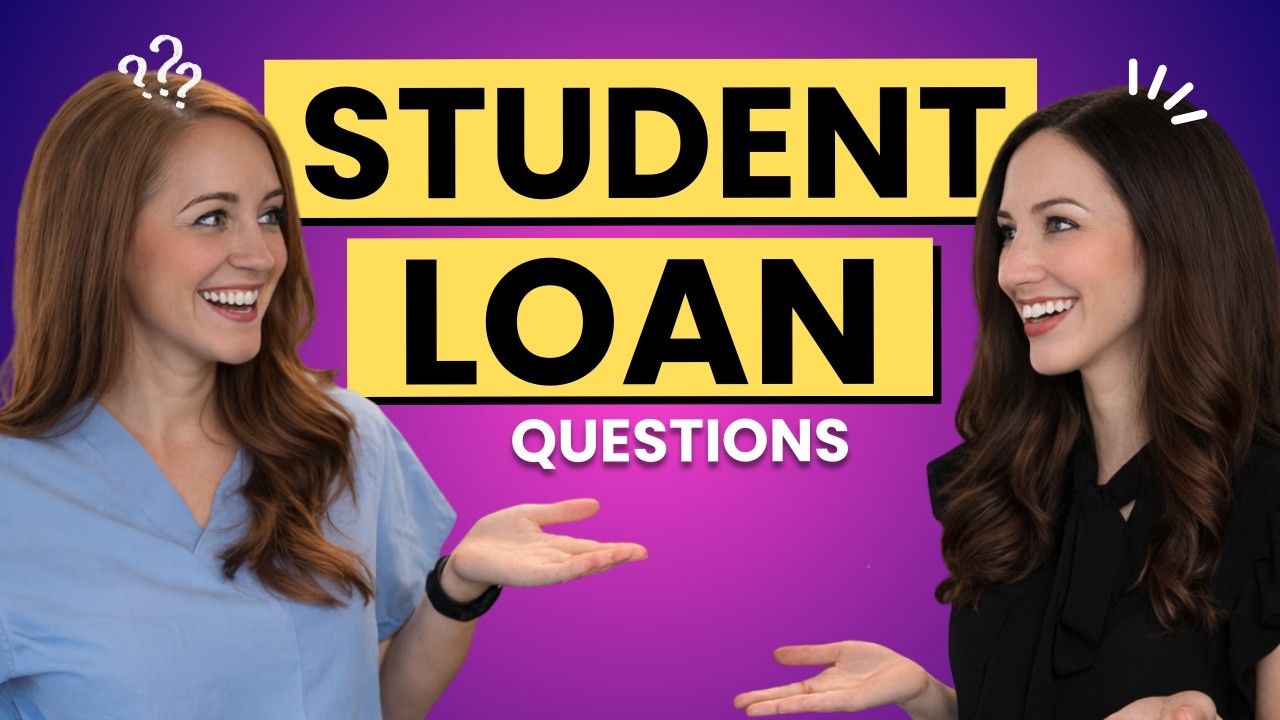
If you're a PA, NP, pharmacist, or physician trying to figure out what to do with your student loans, you've probably asked some version of this question:
“Should I refinance my federal student loans to a lower rate and just pay them off faster?”
It seems like an obvious move.
Lower interest rate. Faster payoff. Done.
But this decision is far more complex than it looks, and for medical professionals in particular, refinancing can either save you a lot of money… or cost you access to some extremely valuable protections.
In this conversation, I sat down with Kaitlin Hile, PharmD, BCCP, a cardiology clinical pharmacy specialist who has undergone specialty training in federal student loan strategy.
We walked through some of the most common questions clinicians ask about refinancing, forgiveness, and repayment strategies.
Let’s break down the key takeaways.
The First Question to Ask Before Refinancing Student Loans
One of the first questions that came up was from a medical professional with about $130,000 in student loans with interest rates between 6.5% and 9%.
They were wondering:
Should I refinance my loans to a 5-year term to pay them off aggressively, or stick with a 7–10 year term?
Before you even compare term lengths, Kaitlin said you need to ask a much bigger question:
Do you need access to federal loan protections?
Because the moment you refinance federal student loans into private loans, you permanently lose access to things like:
- Public Service Loan Forgiveness (PSLF)
- Income-driven repayment plans
- Taxable loan forgiveness options
- Federal deferment and hardship programs
- Certain disability and death discharge protections
Once you refinance, there’s no going back.
So the first step isn’t rate shopping.
The first step is deciding whether federal protections matter for your situation.
Why Federal Student Loan Protections Matter More Than You Think
Many clinicians assume they'll never need these protections.
But careers — and life — don’t always go exactly as planned.
Federal student loans give you options like:
- income-driven repayment plans if income temporarily drops
- deferment during hardship
- forgiveness programs if you work for qualifying employers
These safety nets often don’t exist in the private loan world.
Private lenders are straightforward:
You borrowed the money. You pay it back according to the contract.
That simplicity can be fine — but only if you're confident you won't need the flexibility federal loans provide.
When Refinancing Student Loans Might Make Sense
Now, this doesn't mean refinancing is automatically a bad idea.
There are situations where it can make sense.
For example, if:
- you have stable income
- you’re not pursuing loan forgiveness
- you want to aggressively pay down your debt
- and you can significantly lower your interest rate
Then refinancing could save you real money over time.
But Kaitlin emphasized that refinancing should be considered after evaluating your long-term strategy, not just because the rate looks attractive.
The Trade-Off Most Medical Professionals Miss
One of the biggest mistakes clinicians make is focusing only on interest rates.
They see a lower rate and assume refinancing is automatically better.
But refinancing is really a trade-off between:
Lower interest costs vs. flexibility and protections.
Federal loans come with guardrails.
Private loans come with fewer options.
If your career path is stable, your income is strong, and you're confident you won't pursue forgiveness, refinancing might be reasonable.
But if there’s any chance you might benefit from programs like PSLF, refinancing too early could eliminate that opportunity forever.
What Happens If You Pass Away or Become Disabled?
This is another area many people don’t think about when comparing loan types.
Federal student loans have clear discharge protections.
For example:
- Federal loans are discharged in the event of death.
- There are disability discharge programs as well.
Private lenders vary.
Some lenders may offer similar protections. Others may not.
And in some cases, if a loan has a co-signer, that person may still be responsible for repayment depending on the contract terms.
This is why understanding the terms of your loans is so important before making changes.
The Bigger Picture: Student Loan Strategy Should Fit Your Life Plan
At the end of the day, refinancing isn't a purely mathematical decision.
It’s a strategy decision.
You need to consider:
- your career trajectory
- whether PSLF is realistic
- your tolerance for risk
- your timeline for paying off debt
- and how aggressively you want to eliminate your loans
Two clinicians with identical loan balances could make completely different — and equally correct — decisions depending on their goals.
Watch the Full Episode
If you want to hear the full conversation where we walk through these scenarios in detail, you can watch the full episode below.
Want Help Creating a Real Student Loan + Wealth Strategy?
Student loans are only one piece of the financial puzzle for medical professionals.
Inside Millionaires in Medicine, we help clinicians build a complete plan that includes:
- student loan repayment strategy
- income optimization and negotiation
- investing systems
- tax strategy
- long-term wealth building
👉 Book a call with our team for a “gap check” in your current plan
Author

Kristin Burton
Founder
Kristin Burton is a pulmonary/critical care PA and founder of Millionaires in Medicine. She paid off $161,000 in student loan debt in 16 months, and then went on to become a millionaire at 31.

Have insurance needs?
Look no further than Protuity for your life and disability insurance.

Navigating physician contracts can be overwhelming. Resolve offers a personalized legal experience to equip you with the tools and support needed to secure the best terms for your career.
Use code MIM15 to receive a 15% discount at checkout.

Doc2Doc helps healthcare providers explore personal loan options to consolidate debt, simplify payments, and potentially lower what they’re paying in interest.
Prepping for EORs, PANCE, PANRE, or EOC?
Get the support you need right now to stop second guessing your test answers, ditch your anxiety, and learn the 7 critical test-taking skills you need to knock your PA exams out of the park.