
How to Pay Off Credit Card Debt as a PA, NP or PharmD: The 20% Rule
How to Pay Off Credit Card Debt as a PA, NP or PharmD: The 20% Rule
$200 a month on a $10,000 balance takes 10 years. Here's the system that turns it into a plan measured in months.
To pay off credit card debt fast, stop using the card, keep only your employer 401(k) match, and send 20% of your take-home pay to the balance on top of the minimum. On $10,000 at 21%, that turns a 10-year, $14,000-interest payoff into under a year and about $1,000 in interest.
Key takeaways
- Credit card debt is a money systems problem, not a character flaw.
- Pay off a 20%+ card before investing. The one exception is your employer match.
- Split your budget into minimum payments and "progress dollars," and make progress dollars 20% of take-home pay.
- Find the margin in big categories like housing and cars, not coffee.
- 0% transfers and consolidation loans can lower interest, but they don't change the plan.
Let's say you have $10,000 on a credit card at 21% interest. You decide to pay $200 a month. It feels reasonable. It feels attainable. You don't have to change anything about your life.
Let's run the math.
That plan takes 120 months to pay off. That's 10 years. And along the way you pay almost $14,000 in interest — more than the balance itself.
Same balance. Same rate. Different system.
About $13,000 and nine years back.
The difference is the system behind it. That's what this post is about.
And you're not alone in this. Between one in two and one in three medical professionals who join the Millionaires in Medicine community are dealing with credit card debt. That tracks with national data — according to Academy Bank, 46–47% of Americans carry a balance month to month. Highly educated, six-figure incomes, same struggle.
Watch the full breakdown
If you'd rather watch than read, I cover everything in this post in the video below. Prefer audio? The podcast version is at the bottom of this page.
Why do PAs, NPs and PharmDs end up with credit card debt?
Before we talk strategy, separate this from shame.
A credit card balance doesn't mean you're lazy, irresponsible, or bad with money. If it's there, it's a signal that you need a different money system — not a different personality.
For some people it shows up all at once: a job loss, a medical emergency, a sick kiddo, with no emergency fund to absorb it. For others it's a slow leak. Every month, spending runs a few hundred dollars past what comes in. Not a huge amount. But at 20%+ interest, it compounds.
Either way, the fix is the same. Solve the math, and fix the system underneath it so you don't end up back here.
Should you invest or pay off credit card debt first?
The most common question I get: why can't I split the difference? Invest a little, maybe buy a house, and let the card balance hang out in the background?
Because of the math. According to LendingTree, the average credit card interest rate in 2026 is over 20%. To justify investing instead, you'd need an investment that reliably beats that.
| Where your dollar goes | Typical rate | What it means |
|---|---|---|
| Credit card balance | 20%+ | What you're losing every year |
| Stock market (historical) | About 8–11% | Doesn't consistently beat 20% |
| Federal student loans | Often 6–7% | Lower priority than the card |
| 401(k)/403(b) employer match | 100% on matched dollars | The one exception — keep getting it |
The stock market doesn't consistently return over 20%. Most of the time, real estate doesn't either. Your student loan rate is lower still. The one move that beats the card is your employer match: a dollar-for-dollar match is a 100% return before the market does anything.
A medical professional recently asked me: if I can afford to invest even though I have this debt, why can't I just do both? You could. But you're never going to earn 25% year after year — so every dollar you invest instead of paying the card is quietly losing money.
Should you buy a house if you have credit card debt?
It feels separate — it's a different kind of debt, and you're buying something you'll live in. But I would never tell anyone, family, friend or client, to buy a home without an emergency fund.
Moving is expensive. Then you get into the new house and the inspection missed something. The roof needs replacing. None of those repairs are a few hundred dollars. They're a few thousand.
When you rent, your housing cost has a cap: the rent. The $10,000 repair is the landlord's problem. When you buy, the mortgage becomes the floor, and everything above it is yours. Move in strapped for cash and you'll be back on the card. Clear the card and build reserves first.
How do you pay off credit card debt fast? The 20% Payoff Plan
|
1
|
Stop using the cardI'm not anti–credit card. I put almost every transaction I make on one, and I love my points. But once you're carrying a balance, keep it simple — complicated never lasts more than a month or two. If you keep swiping while paying it down, you can't tell whether a payment covered this month's groceries, last month's vacation, interest, or real principal. Put the card away, and every payment you make is progress. |
|
2
|
Build a simple cash flow systemYou can't decide how much to put toward the card until you know where your money goes. This can be the simplest zero-dollar budget in a free app. It just has to exist. In personal development, making your bed is called a keystone habit. In money, a cash flow system is the keystone habit. I have zero debt and my investing is automated, and I still use a budget every single month — it's how I know the trip is covered and we can still invest for ourselves and the kids. My step-by-step budgeting system is at millionairesinmedicine.com/debtscleared. |
|
3
|
Split minimums from progress dollarsProgress dollars (noun): money in your budget set aside only to move your net worth forward, separate from bills and minimum payments. While you have credit card debt, all of it goes to the card as the extra payment.
Most budgets only keep the ship from taking on water. Bills get paid, nothing moves. Give your budget two separate lines: expenses, where your minimum card payment lives with rent and groceries, and progress dollars, a category all its own for money that moves the needle. While you have card debt, all of your progress dollars go to the card as the extra payment. |
|
4
|
Make progress dollars 20% of your take-home payMost people hear 20% and say, "I can't afford that." It isn't random. If you went to graduate school and didn't start investing until your late 20s, investing less than about 20% of your income makes retiring on time very hard. You'll need that margin eventually anyway. Build it now: it clears the card fast, and when the card is gone, the margin is already there for the wealth-building season. On a $5,000 monthly take-home, that's $1,000 a month — the plan from the top of this post. |
|
5
|
Find the margin in the big categoriesBe ruthless, but in the right place. Don't start with Starbucks. Start with the biggest lines: housing, car payment, student loan payment, childcare, dining out. If you cut the guac at Chipotle for an entire year, it wouldn't come close to the margin you'd gain from downsizing your apartment. Big things first. |
Get the 20% Payoff Plan
The 5-step worksheet that walks you through this exact plan with your own numbers: the priority check, your balance list, your progress dollars, and the margin finder. About an hour, with your last two statements in front of you.
Send me the 20% Payoff PlanOn Instagram? Comment PAYOFF on any of my posts and I'll send it to you.
Does a 0% balance transfer or consolidation loan help?
I'm all for paying less interest. But neither one changes the plan.
0% APR balance transfers usually give you a 12 to 18 month window, depending on your credit. When it ends, you have high-interest debt again. So the point is to pay the balance off inside the window — which takes the same kind of monthly payment as the 20% plan.
Personal loans can consolidate several cards into one monthly payment at a lower rate. Doc2Doc Lending is one option built for medical professionals, and your rate depends on your credit. (Millionaires in Medicine is a Doc2Doc Lending partner and may be compensated for referrals.) Going from 21% to 12% is real interest-rate arbitrage. But in my mind anything above 10% is still high-interest debt you won't outpace with market returns. Same plan, same urgency.
Should you pay off student loans the same way?
Federal student loans are a completely different animal. There's PSLF, forgiveness programs, income-driven repayment, and a lot of strategy available to you. Don't lump all your debt into one "debt is bad" bucket and attack it the same way. High-interest debt gets this plan. Student loans get their own.
The bottom line
I recently got an email from a PA facing about $30,000 in credit card debt. She'd read my book, laid out her payoff math, and it was a reasonable plan. Then she ended with this: "This is going to take a restructuring of the way I view money."
That's exactly it. Credit card debt is a math problem — and it's a money systems problem. Solve the math, fix the system, and this becomes a box you check quickly and look back on as the beginning.
Listen to the podcast episode
Prefer audio? Listen on your commute, your next long shift, or anywhere you want to learn without looking at a screen.
Find The Millionaires in Medicine Show on Spotify, Apple Podcasts, and wherever you listen.
Questions and answers
Should I invest or pay off credit card debt first?
Pay off the credit card first. The one exception is your employer 401(k) or 403(b) match, which is a 100% return on matched dollars. Average card rates are over 20%, while the stock market has historically returned about 8–11%, so investing instead of paying the card usually loses money.
How long does it take to pay off $10,000 in credit card debt?
It depends on the payment. At 21% interest, paying $200 a month takes about 120 months (10 years) and costs almost $14,000 in interest. Paying $1,000 a month, which is 20% of a $5,000 take-home, clears it in under a year with about $1,000 in interest.
How much should I pay toward credit card debt each month?
Aim for 20% of your take-home pay as an extra payment on top of your minimum. That is the same margin a PA, NP or PharmD needs to invest later to retire on time, so building it now speeds up the payoff and carries straight into wealth building.
What are progress dollars?
Progress dollars are the part of your budget set aside only to move your net worth forward, separate from bills and minimum payments. While you have credit card debt, all of your progress dollars go to the card as an extra payment. Once the card is gone, they go to investing.
Should I stop using my credit cards while paying them off?
Yes. If you keep using the card, you can't tell whether a payment covered new spending, interest or principal. Putting the card away makes every payment visible progress toward a zero balance. You can go back to using cards for points once the balance is gone and your system is in place.
Is a 0% balance transfer a good idea?
It can save interest, but it doesn't change the timeline. Most 0% windows last 12 to 18 months, so you still need to pay the full balance inside the window. Stop using other cards first, or new debt builds behind the transfer and leaves you worse off.
Should I consolidate credit card debt with a personal loan?
A lower-rate personal loan can help, because going from 21% to around 12% saves real interest. But anything above about 10% is still high-interest debt you won't outpace with market returns, so keep the same urgency and the same 20% payoff plan.
What counts as high-interest debt?
A good rule of thumb is any debt above about 10% interest, such as credit card balances and many personal loans. Debt at that rate is hard to outpace with investing, so it should be paid off before you put extra money into the market. Federal student loans are a separate category with their own strategy.
Should I buy a house if I have credit card debt?
It's safer to clear the card and build an emergency fund first. When you rent, repairs are the landlord's bill. When you own, the mortgage is the floor and every repair above it is yours, so buying while short on cash often leads right back to the card.
Sources
- Academy Bank — Average American credit card debt statistics
- LendingTree — Average credit card interest rate in America
- Payoff math: $10,000 at 21% APR, fixed monthly payments of $200 and $1,000, interest compounded monthly.
|
KB
|
Kristin Burton, MPAS, PA-C is a practicing physician assistant and the founder of Millionaires in Medicine, where she teaches PAs, NPs and PharmDs how to pay off debt, use student loan strategy and build wealth. She became a millionaire at 31 on a PA salary through strategic income optimization and low-cost investing. Her book, The PA Millionaire Path, is available on Amazon. Learn about personalized coaching at millionairesinmedicine.com/coach. |
Results vary. Past performance is not a guarantee. This is educational content, not individualized financial advice.
Author

Kristin Burton
Founder
Kristin Burton is a pulmonary/critical care PA and founder of Millionaires in Medicine. She paid off $161,000 in student loan debt in 16 months, and then went on to become a millionaire at 31.

Have insurance needs?
Look no further than Protuity for your life and disability insurance.
Navigating physician contracts can be overwhelming. Resolve offers a personalized legal experience to equip you with the tools and support needed to secure the best terms for your career.
Use code MIM15 to receive a 15% discount at checkout.

Doc2Doc helps healthcare providers explore personal loan options to consolidate debt, simplify payments, and potentially lower what they’re paying in interest.
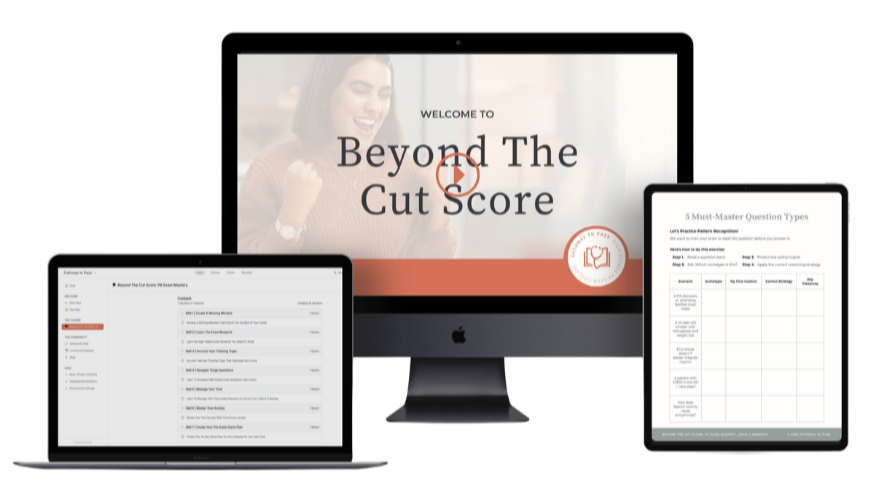
Prepping for EORs, PANCE, PANRE, or EOC?
Get the support you need right now to stop second guessing your test answers, ditch your anxiety, and learn the 7 critical test-taking skills you need to knock your PA exams out of the park.